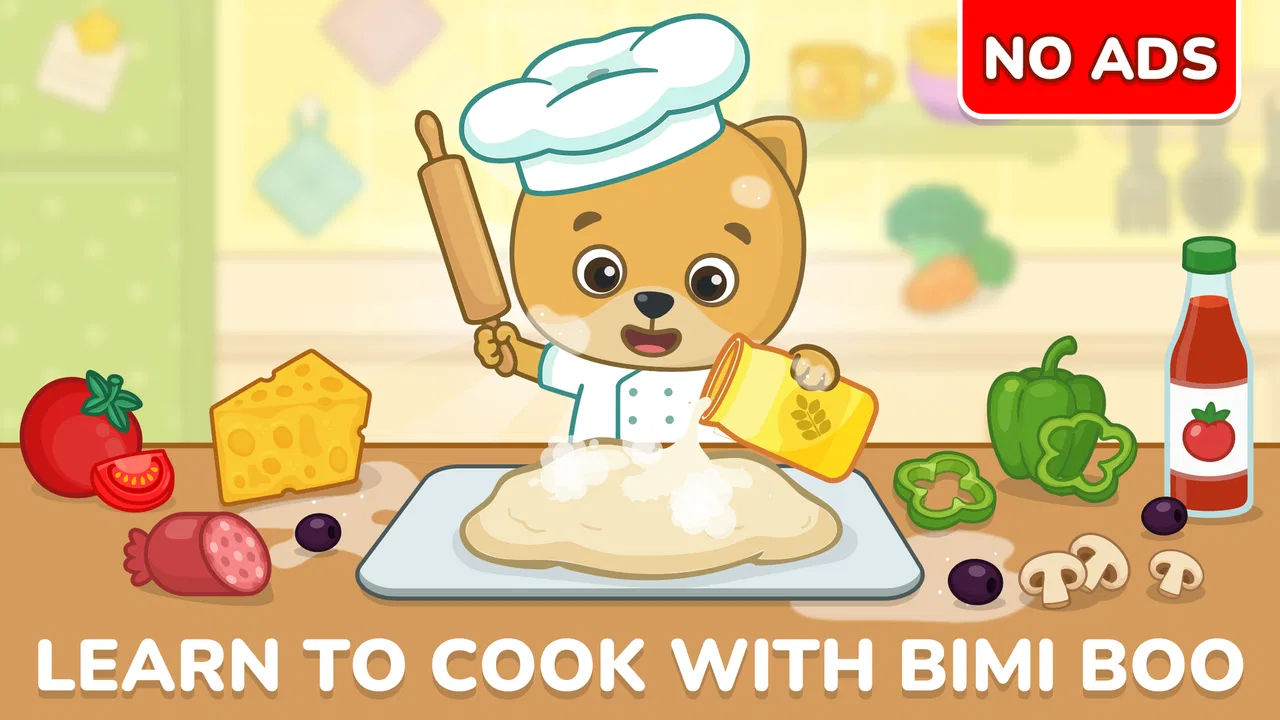
Kids Cooking Games 2 year olds
- 4.5
- Rating
- 1.00M
- Installs
- Free
- Price

 Analysis by App-foxy
Kids Cooking Games 2 year olds is the kind of educational game I would hand to a preschooler when I wanted something playful, simple, and connected to everyday life. Its central idea is easy to understand: children explore cooking and restaurant activities while learning through touch. After spending time with it, my main impression is that it works best as a short, guided activity rather than as a complete substitute for creative play, a cooking lesson, or a more demanding educational program.
That distinction matters. The game is aimed at very young children, so its value comes from accessible interaction and familiar food-related themes, not from complex rules or deep progression. I found the restaurant setting useful because it gives children a reason to repeat actions: prepare something, serve it, and feel involved in running a small food business. For a child who enjoys copying adults in the kitchen, that context makes the experience more inviting than a collection of disconnected drills.
What the cooking play feels like
The first thing I noticed is how quickly the premise becomes understandable. A young child does not need to read a long explanation to recognize that the game is about food and serving customers. That low entry barrier is important for the intended age group. At around two years old, children often learn best when the action is visible, immediate, and tied to something they already know from home.
You May Also Like

 Blood Strike: 2.5 Anniversary
Blood Strike’s Loadouts Turn Every Drop Into a Tactical Gamble
A close look at Blood Strike’s custom loadouts: how fast access to signature weapons reshapes its battle royale rhythm, rewards preparation, and narrows the gap between fights.

 Pandora - Music & Podcasts
Pandora’s Music Is Easy to Start, but Harder to Recover
Pandora’s strength is its low-effort path from a seed to a station. Its weak spot is how much confidence it asks you to place in connection, setup, and quiet recovery.

 8 Ball Pool
 Is Built on Rivalries, Rematches, and Routine
A close look at the rivalries, rematches, shared routines, and unanswered safety questions that turn a quick pool match into a persistent mobile community.

 Samsung Music
’s Quiet Strength Is Playing What You Already Own
Its reach comes less from spectacle than from dependable access to a personal library. That simplicity is both the app’s strongest retention engine and its ceiling.

 AccuWeather: Weather Radar
AccuWeather Review: A Quick, Clear Forecast for Everyday Decisions
For everyday plans, the best forecast is the one you can understand quickly. AccuWeather makes rain timing, radar, and local conditions easy to act on, with a few trade-offs.

 Hill Climb Racing
Why Hill Climb Racing Still Turns Crashes Into One More Run
A tiny car, a bumpy hill and one more upgrade: Hill Climb Racing keeps resurfacing because its simple chaos makes every near-miss feel personal.
More From Our News Desk



I would describe the gameplay as guided pretend play with an educational purpose. It encourages children to follow a sequence of kitchen-related actions instead of simply tapping random objects. That sequence can support basic attention, hand-eye coordination, recognition of familiar items, and the idea that tasks happen in an order. Those are modest learning goals, but they are appropriate for a toddler-focused game.
The restaurant theme also gives parents an easy way to talk alongside the game. I can imagine saying, “What are we making?” or “What comes next?” while the child interacts with the screen. That turns passive screen time into a small conversation. The app is more useful when an adult occasionally joins in, especially because a two-year-old may not understand every visual cue or may move on before completing an activity.
One practical strength is that the game can fit into short periods. I would use it while waiting for an appointment, during a quiet moment before dinner, or when a child needs a calm activity during travel. It does not require a long setup or an explanation of complicated controls. The free download makes it easy to try without committing immediately, although the presence of optional purchases means I would still check the device’s purchase settings before giving it to a child.
The game comes from Bimi Boo Kids Learning Games for Toddlers FZ-LLC, a developer focused on early-learning experiences. It is listed as an educational game for Everyone, and it runs on Android devices using version 7.0 or later. That broad compatibility is helpful for families using an older phone or tablet, though the actual comfort of play will still depend on the screen size and the child’s ability to hold the device safely.
Why the theme works for toddlers
Cooking is a particularly effective theme for very young children because it connects digital actions with real routines. A child may have watched a parent stir, cut, pour, or serve food, even if the child is not ready to do those things independently. A game can offer a safe symbolic version of that participation. I think this is more engaging than teaching abstract concepts without a recognizable setting.
The restaurant angle adds another layer. Children are not only pretending to prepare food; they are also imagining a role. That can encourage simple social language, such as naming foods, asking what someone wants, or talking about serving. The app should not be treated as a full language course, but it can give parents prompts for conversation that a more mechanical puzzle might not provide.
There is also a useful difference between watching a cooking video and interacting with a cooking game. A video shows a finished sequence, while an interactive activity asks the child to participate. That participation may help maintain attention for longer than passive viewing. On the other hand, a real kitchen remains richer for sensory learning because children can smell ingredients, feel textures, and see how food changes. I see this game as a preparation for those conversations, not a replacement for them.
Small details that improve the experience
My strongest recommendation is to use the game as a shared routine rather than leaving it open indefinitely. Before starting, I would tell the child that we are going to make one meal or serve one group of customers. When the activity ends, I would connect it to real life by asking whether the child wants to help wash fruit, arrange napkins, or choose between two safe foods. This makes the digital activity a starting point for practical learning.
A second useful approach is to let the child lead the naming. Instead of correcting every response, I would ask open questions: “Is that hot or cold?” “What color do you see?” or “Who might eat this?” Even if the game itself does not demand those answers, the cooking setting gives the child a natural reason to practice vocabulary and observation. This is one of the better ways to get more value from a simple toddler game.
I would also avoid treating speed as success. A toddler may repeat one action, pause for a long time, or tap the same object several times. That is not necessarily a problem. Repetition can be part of how the child explores cause and effect. If an adult rushes to complete every step, the game becomes a demonstration instead of the child’s activity. Patience makes the experience more worthwhile.
The limitation parents should understand
The biggest weakness is also connected to the target age: the experience may become repetitive for children who want more challenge. A toddler can enjoy repeating familiar cooking actions, but an older preschooler may soon look for richer stories, more varied problem-solving, or a stronger sense of progression. I would not choose this as the main educational game for a child who has already outgrown very simple touch interactions.
There is another form of friction in the business model. The game is free to install, but optional in-app purchases range from $5.99 to $109.99 per item. That does not automatically make the app a poor choice, but it does mean that “free” should be understood as an opportunity to try it, not as a guarantee that every part of the experience is open without payment. For a toddler’s device, I would enable purchase restrictions and explore the available content myself before allowing unsupervised play.
Because the audience is so young, the app also depends heavily on the child’s motor skills and the device. A small phone screen can make taps less comfortable, while a larger tablet is usually easier for a child to see and reach. A child who is still learning to distinguish taps, swipes, and accidental touches may need an adult nearby. If the child becomes frustrated because an action does not register, the problem may be the hardware or the interaction rather than the child’s understanding.
I would not use this game when I need a quiet activity that requires no supervision at all. A two-year-old may need help interpreting what to do, and the most valuable learning comes from talking about the activity. It is also not the right choice for a family looking for realistic nutrition education. The restaurant fantasy is appealing, but pretend cooking and healthy-food guidance are different goals.
How it compares with familiar alternatives
Compared with ordinary toddler puzzle games, this one has a clearer everyday setting. A shape-matching activity can be excellent for recognition and problem-solving, but cooking play offers more opportunities for pretend roles and conversation. I would choose the cooking theme when a child is especially interested in meals, restaurants, or copying household routines.
Compared with open-ended drawing apps, it is more structured. Drawing gives children freedom to create without a fixed sequence, while this game provides a guided path through food-related actions. That structure can help a child who does not know what to do with a blank canvas. However, children who enjoy inventing their own scenes may prefer drawing because it gives them more control over the outcome.
Compared with real kitchen participation, the game is safer and easier to manage, but much less sensory. It can introduce the idea of preparing and serving without knives, heat, spills, or raw ingredients. Still, I would follow it with a real-world task suited to the child’s age, such as placing soft fruit in a bowl or pretending to take an order. That combination gives the game a purpose beyond keeping the child occupied.
Compared with more advanced preschool learning suites, it is narrower. A broader app may cover letters, numbers, memory, music, and puzzles in one place. This game is more focused on cooking and restaurant pretend play. That focus is a strength for a child who is motivated by food, but a weakness for parents wanting a single app with a wide curriculum.
Who will get the most from it
I think the best audience is toddlers who enjoy imitation and can manage basic touch interaction with help nearby. It is particularly suitable for a child who likes watching adults prepare meals, playing with toy kitchens, or pretending to serve food. The Everyone age rating reflects its broad family positioning, but parents should still judge whether their own child is ready to use a screen without becoming overwhelmed.
It can also work well for families introducing a first cooking-themed game. The familiar context gives adults plenty of ways to extend the play without needing specialist teaching knowledge. A parent can connect the virtual restaurant to shopping, table setting, food names, colors, and simple routines. That flexibility is more valuable to me than a game that offers only rapid rewards.
I would skip it if the child dislikes guided activities, becomes upset by repeated prompts, or already wants complex games with stories and decisions. I would also look elsewhere if the main goal is phonics, counting practice, drawing, or detailed science learning. The app may support general early development through interaction, but it should not be mistaken for a complete learning plan.
The audience figures suggest that it has reached a substantial family audience, with over one million installs and an average rating of 4.4 from around 9.6 thousand ratings. Those figures tell me that the concept has broad appeal, but they do not remove the need to test the experience against a particular child’s temperament. A popular toddler game can still be a poor fit for a child who prefers quieter or more creative play.
What to expect before installing
The game was released on October 12, 2023, and its current version is 1.24. I would make sure the device meets the Android requirement before planning to use it, especially if the app is being installed on an older family tablet. I would also leave enough time for an adult to explore the opening experience first, because toddlers are not good candidates for learning through trial and error with purchase screens or unfamiliar menus.
Since the app is free to start, my approach would be simple: install it, test the available activity with the child for a few minutes, and watch whether the child understands the visual direction without constant rescue. If the child starts experimenting happily, that is a good sign. If the child only taps randomly or becomes frustrated, I would not force it simply because the theme sounds suitable.
For everyday use, I would keep sessions short and purposeful. A good routine might be to play before helping with a safe food-related task, then stop while the child is still interested. Ending at that point can prevent the game from turning into background noise. I would also vary the adult’s questions rather than repeating the same praise, so the child gets chances to describe, predict, and remember.
One detail worth keeping in mind is that the app’s educational value is not limited to whether the child completes every digital step. The richer outcome may be the conversation afterward. Asking the child to recall what was prepared, pretend to serve it, or compare it with dinner can turn a short screen session into a broader language and role-play activity. Without that connection, the app is more likely to function as simple entertainment.
My final recommendation
Kids Cooking Games 2 year olds is a good focused choice for toddlers who are drawn to pretend kitchens and familiar daily routines. I like its approachable cooking theme, its suitability for short sessions, and the way it gives parents an easy opening for conversation. It feels more meaningful than a completely random tapping game because the child can connect the on-screen activity with things seen at home.
At the same time, I would keep expectations realistic. It is not a substitute for real cooking participation, a broad preschool curriculum, or an advanced game. Repetition may limit its appeal for older children, and the in-app purchase range means adults should manage access carefully. The best results come when a parent treats it as a shared prompt for play rather than a digital babysitter.
For my own recommendation, I would try it for a toddler who enjoys food, restaurants, and copying grown-ups. I would choose a different app for a child seeking open-ended creation, stronger academic practice, or more challenging puzzles. If the cooking theme matches the child’s interests, this is a friendly and accessible introduction to educational pretend play, with enough practical value to earn a place in a carefully managed collection of early-learning games.
FAQs for Kids Cooking Games 2 year olds
01What age group is Kids Cooking Games 2 year olds suitable for?
Kids Cooking Games 2 year olds is specifically designed for toddlers aged 2 to 5 years. The app features simple and intuitive controls that are easy for young children to understand and use, making it a great educational tool to introduce them to basic cooking concepts and improve motor skills.
02Are there in-app purchases in Kids Cooking Games 2 year olds?
Yes, the app includes in-app purchases. While the basic version offers a variety of free activities, additional content and features can be unlocked through purchases. Parents should be aware of this and may want to adjust device settings to prevent unauthorized purchases by their children.
03Is Kids Cooking Games 2 year olds available on both Android and iOS?
Yes, Kids Cooking Games 2 year olds is available for download on both Android and iOS platforms. You can find it on the Google Play Store for Android devices and the Apple App Store for iOS devices. Ensure your device meets the minimum system requirements for optimal performance.
04Does Kids Cooking Games 2 year olds require an internet connection?
No, Kids Cooking Games 2 year olds does not require an internet connection to play. This makes it convenient for use in environments where Wi-Fi is unavailable, such as during travel. However, an internet connection may be needed for downloading updates or additional content.
05What educational benefits does Kids Cooking Games 2 year olds provide?
Kids Cooking Games 2 year olds offers several educational benefits, including enhancing hand-eye coordination, improving fine motor skills, and fostering creativity. The app introduces children to basic cooking and food preparation concepts through fun, interactive games, promoting learning through play.
Pros
- Engaging and colorful graphics.
- Simple controls for young kids.
- Educational cooking activities.
- Variety of recipes to explore.
- No in-app purchases for safety.
Cons
- Limited recipes may bore older kids.
- Requires internet for updates.
- Ads can be distracting.
- Might lag on older devices.
- Sound effects can be repetitive.

Kids Cooking Games 2 year olds
Gallery